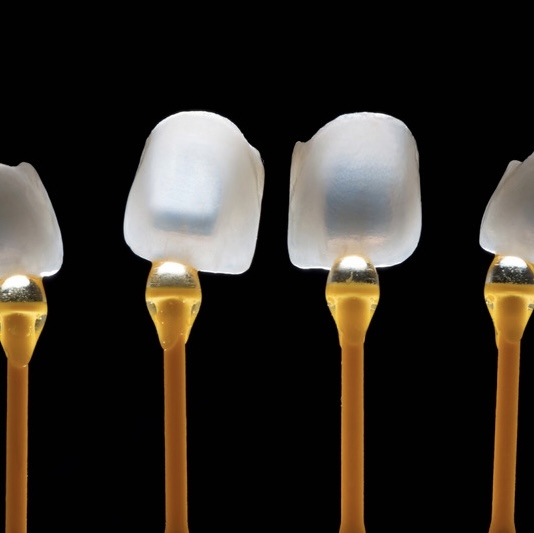
Veneers are 0.3-0.5 mm thick glass-ceramic plates that are affixed with a specific cement. These are a type of micro-prosthesis that provide you with the ability to modify the size, placement, and colour of the teeth.
Table of Contents
TREATMENT OVERVIEW
Timescale
1-3 days
Price
From ₤200
Guarantee
15 years
Anaesthesia
local or local with sedation
Cost of veneers treatment in Turkey
E-Max veneers – £200 per tooth
Lumineers – £237 per tooth
Inlay / Onlay ceramics – £200 per tooth
Metal fused porcelain crown– £120 per tooth
Zirconium crown – £135 per tooth
Medica Smile clinic offers reasonable prices for veneer treatment. You will be able to treat your smile at a low price here, thanks to this. Additionally, you can be sure of the excellent quality of the final result. In addition, you can get full-mouth dental veneers that allows correcting a full jaw at once.
A dental technician classifies them into the following types according to the material and manufacturing process:
Indirect ceramic
Indirect ceramic, produced in a lab by a ceramics technician. The indirect method is regarded as being more difficult because it requires several visits to conduct an examination and model a cast, which includes measurements of the teeth’s size, shape, and level of preparation, as well as the manufacturing of the final product, the placement of temporary onlays, and the creation and fixing of permanent structures.
Direct composite
Direct composite—made from composite resin by a dentist using specialised pigments to create the desired effect. A “live” natural tooth that belongs to the patient is used to create the plates. It is polished. The surface of the treated tooth is then ground and polished to create a veneer. We refer to this process as “creative restoration”. It is appropriate when it’s necessary to fix a chipped or improve the appearance of the tooth. This process is simple to use and quick to complete. The service life is between five and ten years.
Porcelain onlays are constructed of feldspar ceramics, which are incredibly beautiful and nearly identical in strength and structure to genuine tooth enamel.
The cost of the procedure depends on a variety of things. The cost of the raw materials and the manufacturing process are the two most crucial factors. Because they are created within the patient’s oral cavity, composite overlays are no more expensive to implant than crowns. However, the dentist and dental technician must be extremely professional and dedicate a significant amount of time to the creation of ceramic veneers.
What veneers to select in Turkey?
Ceramic
The materials used to make the ceramic and composite veneers also affect the different types of them. Ceramic plates are installed using an indirect method because they are created in a lab. As you are aware, ceramics contain materials created by heating inorganic ingredients to high temperatures. Aesthetic dentistry uses, in particular:
Porcelain
Two processes are used to create porcelain plates: one involves coating a tooth with medical porcelain and burning it afterward, and the second involves applying pressure and high temperatures to press it into the desired shape of the mould. Under strain, ceramics develop extraordinary qualities and become as robust and durable as possible. Porcelain onlays typically looks very natural and lasts a very long period.
Zirconium
Zirconium, which is frequently used in jewellery, was suggested as a material for micro prostheses in quest of one that was even more resilient. Such plates have a zirconium dioxide frame that is created using specialised machinery before being covered in porcelain mass. When veneers are produced by robots, faults can be virtually eliminated because every nuance is taken into account and they are perfectly fitted. Zirconium’s strength and great biocompatibility are its benefits.
Glass-ceramics
They are produced without the use of metal thanks to a unique IPS Empress technology that presses glass-ceramic. The cosmetic and functional aspects of these plates vary greatly, and before installation, the teeth must be slightly turned.
Special ceramics
The USA produces Lumineers, or ceramic Hollywood smile, utilising a unique manufacturing process and specific ceramics. The innovative method enables the production of incredibly strong and thin plates. This implies that Lumineers can be put in place without turning and, if required, taken out. The design is also completely biocompatible, instals easily, and doesn’t lose colour. Ultraniers are the equivalent of lumineers in Europe.
Ceramic veneers have an unlimited service life, but typically the lining lasts 12 to 15 years. It is crucial to remember that zirconia-framed plates are more resilient, and the creators of lumineers and ultraneers guarantee a service life of at least 20 years.
Composite
The substance from which they are manufactured gave them their name. A veneer is constructed layer by layer by the doctor from a composite, a particular filler material.
In contrast to ceramic veneers, composite ones require routine dental updating, daily hygiene practices, and polishing. They can endure up to seven years if given the correct maintenance.